
Comparemypanels.co.uk
- Compare quotesGet several quotes with no obligation.
- One simple formJust tell us the essentials about your home.
- You stay in controlOnly go ahead if a quote suits you.

Fill in your details and MCS-certified installers quote for your home.
Tell us about your home and your details.
Our partners get in touch with you.
You choose the quote that suits you best.
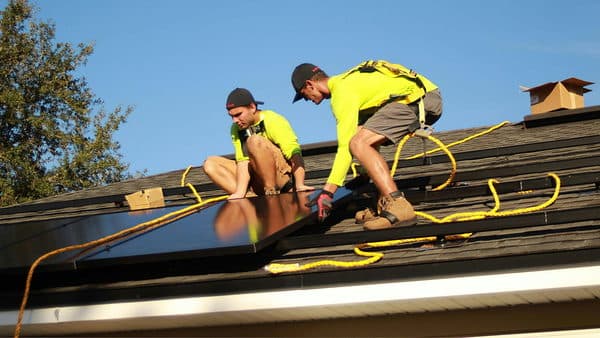
Find the right solar setup for your home.
A typical home solar system is worth around £410 to £470 a year on an east-facing or partly shaded roof, rising to around £605 to £675 a year on an ideal south-facing roof with no shading. Those figures combine electricity bill savings and Smart Export Guarantee payments, at June 2025 prices.
See how we calculated
Through us you get quotes from several installers, so you can choose the one that suits you best.
Get quotesAnswers to the most common questions.
There is no universal solar panel grant available to all homeowners. What does exist is zero-rated VAT on residential installation, running to 31 March 2027, which cuts the cost on a typical £5,000–£10,000 system. Targeted schemes such as ECO4 and local authority retrofit funds can help eligible households, usually those on lower incomes or in fuel poverty, but they are not open to everyone. The Smart Export Guarantee pays you for surplus electricity but is not a solar panel grant.
The Smart Export Guarantee is a scheme under which electricity suppliers with at least 150,000 domestic customers must offer a tariff for surplus solar electricity you export to the grid. The rate is supplier-set and must always be above zero, but it varies, so comparing tariffs before you register pays. To access it, your installation must be certified under MCS or an equivalent scheme. Your installer registers the system; you then apply directly to a supplier for the tariff.
Residential solar installation is currently zero-rated for VAT, meaning you pay 0% on both labour and materials. This rate applies to 31 March 2027, after which it returns to the reduced rate. If you are planning an installation, confirm the completion date relative to that deadline with your installer, and ask what rate applies if the work runs into the following tax period.
The typical payback period is 9–12 years for an ideal south-facing roof, based on Energy Saving Trust figures (Jul 2026 fuel prices). Payback is longer for east-facing or shaded roofs, where annual benefit is lower. The figure depends on your system size, how much generation you use directly, your electricity tariff, and any export payments you receive. An installer quoting a payback figure without stating those assumptions is not giving you a figure you can rely on. Ask for the numbers in writing before you commit.
Most domestic solar installations on pitched roofs fall under permitted development, so no formal planning application is needed. Exceptions include listed buildings, properties in conservation areas, and some national park locations. Your installer should check which rules apply to your property before work starts. If permission is required and not obtained, you may be asked to remove the panels, so confirming this upfront protects your investment.
Panels typically carry a product warranty of 20–25 years; inverters around 5–15 years. These are manufacturer warranties covering the hardware. Your installer's workmanship guarantee covers the installation itself, but the period and scope vary between contractors, so ask for it in writing before you sign. MCS-certified installers must meet minimum standards, and certification gives you access to a formal complaints process if problems arise.
You fill out one form describing your home, roof, and energy needs. Relevant MCS-certified installers then get in touch, typically by phone, with quotes for your specific situation. You compare the offers you receive and choose the installer that suits you. There is no obligation to proceed with any quote, and the service is free to use. The service is commercially funded; this does not affect the quotes installers provide to you. Solar panel grants and eligibility vary by household, so any installer who contacts you can confirm what applies to your situation.
A typical domestic solar system costs £5,000–£10,000, so knowing which grants and support schemes reduce that outlay before you commit is one of the most useful things you can do.
The landscape has shifted: outright government grants for solar are limited, but the combination of zero-rated VAT on installation to 31 March 2027, Smart Export Guarantee payments for surplus power, and local authority schemes means real support is still available to many homeowners.
This page maps the schemes, explains what genuinely counts as a grant, and helps you request quotes from MCS-certified installers who can confirm exactly what applies to your home.
Below is a comparison of what each type is like.
Residential solar installation is currently charged at 0% VAT. That means you pay no VAT on labour or panels. It is a direct saving on the total invoice, and it applies to most homeowners right now. On a typical system costing £5,000 to £10,000, the saving is the full VAT element of that price. No application is needed. Your installer simply applies it at the point of sale, provided they are VAT-registered.
Electricity suppliers with at least 150,000 domestic customers must offer an SEG tariff. This pays you for surplus power you export to the grid. Rates are set by each supplier and vary, so comparing offers can improve your returns. The SEG is a payment for exported electricity, not a grant. Your installation must be certified under MCS or an equivalent scheme. A qualified installer handles that as part of the job.
Some councils and the Energy Company Obligation (ECO4) fund targeted support for low-income or fuel-poor households. Criteria are strict. Homeowners who do qualify can receive real help toward the cost of installation. ECO4 runs through energy suppliers and can cover several measures at once. Some councils add their own top-up funding on top of the national scheme. Availability shifts as funding rounds open and close, so it is worth checking what is current in your area.
Government-backed retrofit programmes, run through local councils, can include solar as part of a whole-home energy upgrade. They are aimed mainly at households not on the gas grid or living in fuel poverty. Solar works best within these schemes as one part of a wider package, not as a stand-alone request. Funding windows open and close, so places are not guaranteed year-round. An assessment or survey is usually needed before approval.
Start with your roof. Orientation and shading determine how much your panels generate, and therefore which payback and export figures are realistic for your home. An installer who assesses your roof properly, rather than quoting a generic output figure, is the one worth taking seriously.
Look for MCS certification. The Smart Export Guarantee requires it, and most credible product warranties assume it. An MCS-certified installer works to a recognised quality standard and gives you access to the industry's complaint resolution process.
Ask each installer for a written quote that breaks down panel cost, inverter cost, installation labour, scaffolding, and any grid connection fees separately. Then ask which warranties cover what: panels typically carry a 20–25 year product warranty; inverters around 5–15 years. A serious installer will tell you what is covered and by whom.
Consumer organisations including Which? and MoneySavingExpert recommend getting at least three quotes. The gap between the lowest and highest quote for the same specification can be substantial, so comparing on like-for-like figures is where the real saving lies.
Fill out one short form about your home and energy use, and several qualified, MCS-certified installers get in touch with concrete quotes tailored to your roof and consumption, not a generic brochure price.
You compare the offers you receive on transparent figures: system size, total cost, estimated export payments, and warranties laid out clearly. There is no commission added to your quote and no obligation to proceed. The service is free to use.
Get your quotes and make a better decision before you commit to any installer.
The larger the system, the higher the installed cost, but also the greater the potential generation. A system sized to match your actual consumption profile avoids paying for capacity you cannot use directly, which is where the payback calculation starts. Ask each installer to size the system against your annual usage, not just your roof space.
Pitched tile roofs are the simplest and least expensive to work on. Flat roofs require mounting frames; slate needs specialist fixings to avoid cracking; listed or conservation-area properties may face additional rules or restrictions. Scaffolding cost varies with roof height and access difficulty, always check whether it is included in the quoted price.
String inverters are the standard choice for straightforward roofs; microinverters or power optimisers suit roofs with partial shading or multiple orientations. Inverter cost and warranty length differ significantly between types, inverters typically carry a 5–15 year warranty, compared with 20–25 years for panels, so factor the replacement cycle into your long-term cost.
Adding a battery lets you store surplus generation for evening use rather than exporting it at the SEG rate. It raises the upfront cost meaningfully but increases the share of your own generation you consume directly, which is usually more valuable than the export payment. Whether a battery makes financial sense depends on your daytime usage pattern and the gap between your import and export tariffs.
Labour rates and travel costs vary across the UK. Urban areas tend to have more competing installers, which can narrow price differences; rural locations may have fewer options and higher travel costs built into quotes. Getting quotes from installers who regularly work in your area gives you the most realistic figures for your postcode.
Item | Value |
|---|---|
Typical payback period | 9–12 years (ideal roof; longer if east-facing or shaded) |
Typical panel/product warranty | panels typically 20–25 years; inverters ~5–15 years |
VAT on residential solar installation | 0% (zero-rated to 31 Mar 2027) |
Typical installed system cost (domestic) | £5,000–£10,000 |
Annual benefit incl. Smart Export Guarantee (up to) | £605–£675 a year with an ideal south-facing roof; £410–£470 east-facing or shaded (bill savings plus SEG export payments, June 2025 prices) |
Facts verified as of 2026-06-30.
Once you have chosen an installer, they will carry out a full home survey, measuring your roof, checking its structural condition, and confirming the best panel layout and orientation.
The installer submits any necessary planning applications before work begins. Most domestic installations on pitched roofs fall under permitted development and require no formal consent, but properties in conservation areas, national parks, or those that are listed may need prior approval from the local planning authority.
On installation day, panels are fixed to the roof, the inverter is mounted (usually in the loft or garage), and the system is wired to your consumer unit. A competent person certificate is issued on completion, which you will need for your SEG application.
Your installer registers the system with the MCS and provides you with the certification documentation. You then apply directly to an electricity supplier for an SEG tariff, comparing rates across suppliers before signing up is worth the time, as rates vary.
Prices and rates reviewed 30 June 2026
Join 50.000 others
Over 50.000 people have used one of our comparison sites to find the right supplier. Now it's your turn - find the right solar installer for your home.
Get quotes from solar installers